 In this roundup, the focus falls on recent releases emerging from the
African continent. This is only partly a reflection of personal tastes,
since it also reflects factors such as availability. Most good record
stores should be able to locate these CDs for you, since they all appear on
some of the more widely distributed world music labels. Needless to say,
all of the albums come with a recommendation.
In this roundup, the focus falls on recent releases emerging from the
African continent. This is only partly a reflection of personal tastes,
since it also reflects factors such as availability. Most good record
stores should be able to locate these CDs for you, since they all appear on
some of the more widely distributed world music labels. Needless to say,
all of the albums come with a recommendation.
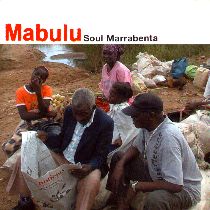
Kicking things off is Mabulu's "Soul Marrabenta" (Riverboat Records/World
Music Network TUGCD1024; www.worldmusic.net). Marrabenta is the traditional
music of Mozambique, and the group Mabulu sees the coming together of two
of Marrabenta's elder statesmen (63-year old Lisboa Matavel, and 73-year
old Dilon Djindji) with some of the new stars of Mozambique hip hop to
create a fusion called Soul Marrabenta. On this, the band's second album,
they also take on board other influences such as South African Kwela, and
Zimbabwe's Chimurenga. The songs tackle a wide range of subjects, including
AIDS (which is still a major concern in many African countries), and the
floods of 2000; the latter is on a song called "Rosita" named after the
baby that was born in a tree which appeared on newscasts throughout the
western world.
I had the great pleasure of catching Mabulu playing live, and "Soul
Marrabenta" goes some way to capturing the energy that the band create on
stage. Like a lot of African music, it is guaranteed to make you want to move.
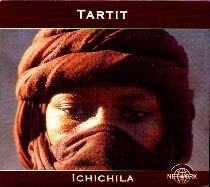 The Tuareg live in five African states, and are traditionally a nomadic
farming people, although many of them have now become more settled and
cultivate the land. Tartit are Malian Tuareg, and comprise five women and
four men, supplemented here by several guest musicians. The music on
"Ichichila" (World Network 36.584; www.netwprkmedien.de) is sometimes
categorized as Desert Blues, and it is not hard to see why. There is a
basic level of emotion and intensity to it, which in places calls to mind
Ali Farka Touré. Tartit's music is an expression of identity, and
tradition. It is not taught to the children, but they are encouraged to
learn by listening if they show any interest.
The Tuareg live in five African states, and are traditionally a nomadic
farming people, although many of them have now become more settled and
cultivate the land. Tartit are Malian Tuareg, and comprise five women and
four men, supplemented here by several guest musicians. The music on
"Ichichila" (World Network 36.584; www.netwprkmedien.de) is sometimes
categorized as Desert Blues, and it is not hard to see why. There is a
basic level of emotion and intensity to it, which in places calls to mind
Ali Farka Touré. Tartit's music is an expression of identity, and
tradition. It is not taught to the children, but they are encouraged to
learn by listening if they show any interest.
Tartit use the traditional instruments of Imzad (fiddle), Tindé (drum) and
Tehadent (lute) supplemented by electric guitar and percussive
handclapping. These are combined in various ways to great effect, and among
my many personal favorite tracks are the opening "Aïtma", which features
just electric guitar and vocals in a song about peace and the return of
sons to their native soil, and the call for peace and reconciliation of "Aï
Hele Dumahele" which is a vocal chant with only hand claps for accompaniment.
There is something very uplifting about "Ichichila." It is probably helped
by the fact that many of the songs are expressions of hope: the fight
against the lack of development that causes famine, war, and drought, and
the hope for peace. Most of the songs are beautifully simple in their
construction, and will have you joining in the chorus lines, even though
you will not know the meaning of the words!
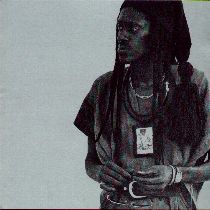 A lot of the greatest music to come out of Africa is actually a hybrid of
sounds from various countries within and across continents. Cheikh N'Digël
Lô's "Bambay Gueej" (World Circuit WCD 0057; www.worldcircuit.co.uk) is
another example. Although Lô is based in Dakar, Senegal, he was born in
Burkina Faso. His musical style combines mbalax dance music from Senegal
with other African styles, and jazz and salsa. There has been a relatively
long Cuban influence on West African music, and this is evident here right
from the lilting opening track ("M'beddeni"), which features celebrated
Cuban flautist, Richard Egües. The band also includes a horn section led by
Pee Wee Ellis (of James Brown fame). Lô has close ties with Youssou N'Dour,
whose influence can be heard in a few places. The title track is a
particular favorite that you could quite easily imagine would fill the
dance floors across the world, given reasonable airplay. It is only when
you get to the closing track, the guitar accompanied vocal chant of "Zikr,"
that Lô reverts to the more traditional Senegalese style.
A lot of the greatest music to come out of Africa is actually a hybrid of
sounds from various countries within and across continents. Cheikh N'Digël
Lô's "Bambay Gueej" (World Circuit WCD 0057; www.worldcircuit.co.uk) is
another example. Although Lô is based in Dakar, Senegal, he was born in
Burkina Faso. His musical style combines mbalax dance music from Senegal
with other African styles, and jazz and salsa. There has been a relatively
long Cuban influence on West African music, and this is evident here right
from the lilting opening track ("M'beddeni"), which features celebrated
Cuban flautist, Richard Egües. The band also includes a horn section led by
Pee Wee Ellis (of James Brown fame). Lô has close ties with Youssou N'Dour,
whose influence can be heard in a few places. The title track is a
particular favorite that you could quite easily imagine would fill the
dance floors across the world, given reasonable airplay. It is only when
you get to the closing track, the guitar accompanied vocal chant of "Zikr,"
that Lô reverts to the more traditional Senegalese style.
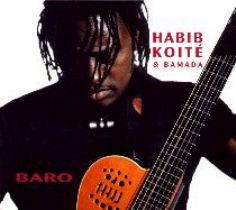 The last CD in this roundup, "Baro" (Putumayo P-192-A; www.putumayo.com)
comes from Habib Koité & Bamada, who, like Tartit are also from Mali,
although Koité is originally from Burkina Faso too. Koité formed Bamada in
1988, and "Baro" is their third album, and they have been steadily building
a reputation which now means that they spend about half of their time
outside of their Malian base. Koité prefers the sound of an amplified
acoustic guitar to an electric, and this lends some of the songs an almost
Spanish flamenco-like feel. The styles are very much Malian, however,
albeit with subtle Western influences to make them more instantly
accessible to a wider audience. Koité adheres to his musical traditions,
however, using the relevant musical scales for each of the different styles
and he sings in all the main languages of Mali (Bambara, Songhai, Peul,
Bobo and Khassonke).
The last CD in this roundup, "Baro" (Putumayo P-192-A; www.putumayo.com)
comes from Habib Koité & Bamada, who, like Tartit are also from Mali,
although Koité is originally from Burkina Faso too. Koité formed Bamada in
1988, and "Baro" is their third album, and they have been steadily building
a reputation which now means that they spend about half of their time
outside of their Malian base. Koité prefers the sound of an amplified
acoustic guitar to an electric, and this lends some of the songs an almost
Spanish flamenco-like feel. The styles are very much Malian, however,
albeit with subtle Western influences to make them more instantly
accessible to a wider audience. Koité adheres to his musical traditions,
however, using the relevant musical scales for each of the different styles
and he sings in all the main languages of Mali (Bambara, Songhai, Peul,
Bobo and Khassonke).
There is much to admire here, from the opening Cuban-influenced
"Batoumambe" through the Latin-style revamp of his first hit "Cigarette A
Bana" to the closing "Sinama Denw." Everything about the band slots
perfectly in place, which at least partly reflects their musical
relationships: Koité and fellow guitarist have played together for 28
years, and balofon (similar to the marimba) player Kélétigui Diabaté, who
is now into his 70's recorded with Lionel Hampton back in the 1960's.
There is very nice relaxed feel pervading "Baro" which makes it ideal to
help chase those winter blues away.
This review is copyright © 2001 by Gordon Baxter, and Blues On Stage, all rights reserved. Copy, duplication or download prohibited without written permission. For permission to use this review please send an E-mail to Ray Stiles.


 We build websites